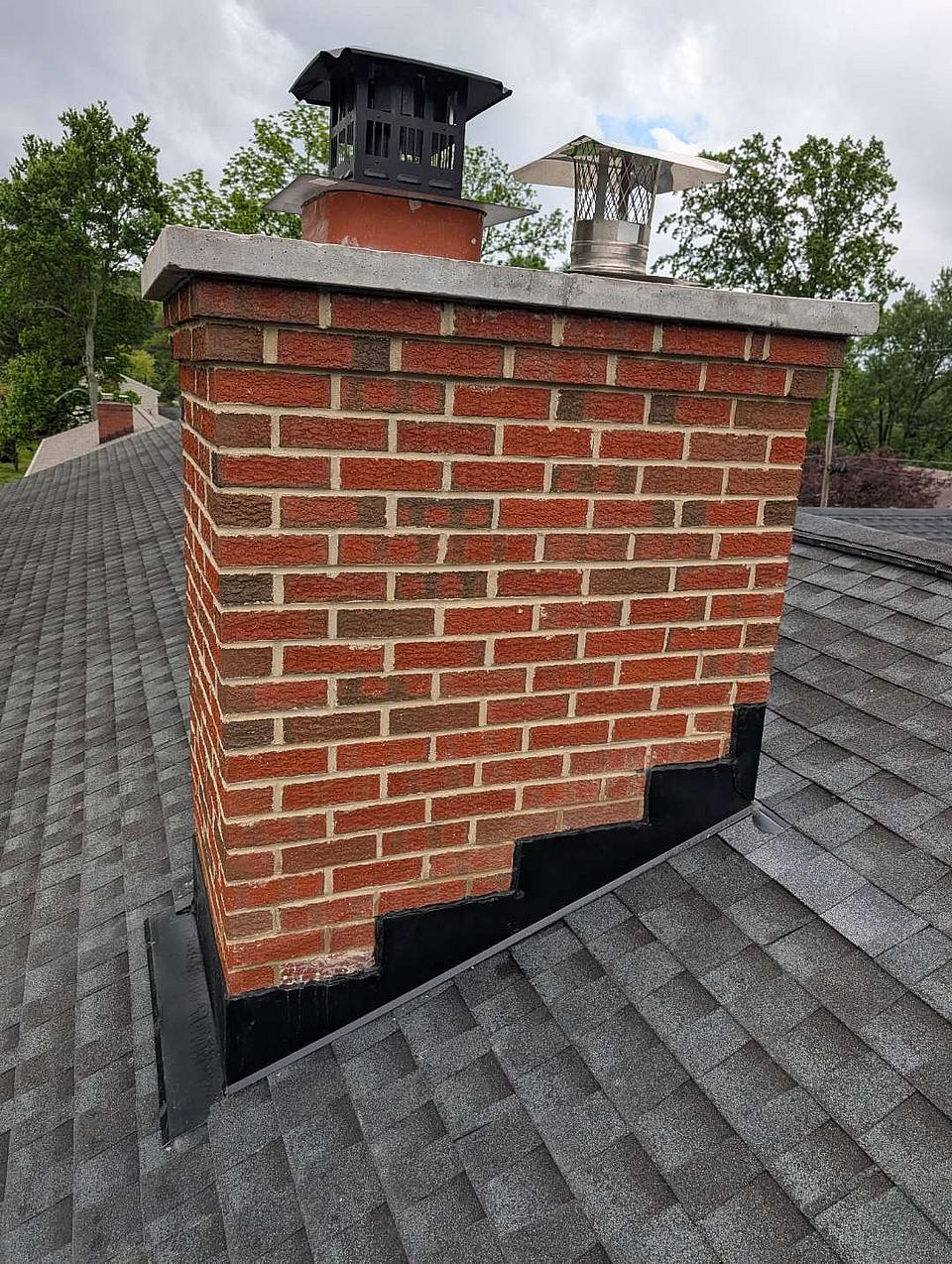
Receded Joints
Mortar that has noticeably pulled back between brick courses indicates joint deterioration that tuckpointing can address while the surrounding brick is still sound.
Mon–Fri 8:30 AM – 4 PM
Home > Services > Masonry Repairs & Tuckpointing
We provide mess-free, CSIA-certified cleaning for cleaner-burning fireplaces and better-protected homes across Towson, Catonsville, Severn, Halethorpe, and Sykesville.
Keeping your chimney strong, beautiful, and standing tall decade after decade takes a little work on your part. After all, your chimney is up there and out there, day in and day out, taking on rain, wind, and sometimes snow, sleet, and ice. All of the moisture and fluctuations in temperatures can lead to masonry damage, especially where your mortar joints are concerned. Brick is stronger and able to last 100 years, sometimes more. Mortar, on the other hand, can deteriorate and wear away in just a couple of decades. When you need expert masonry repair and tuckpointing, the team at Trinity Chimney Service is here to help.
Finding a Solution
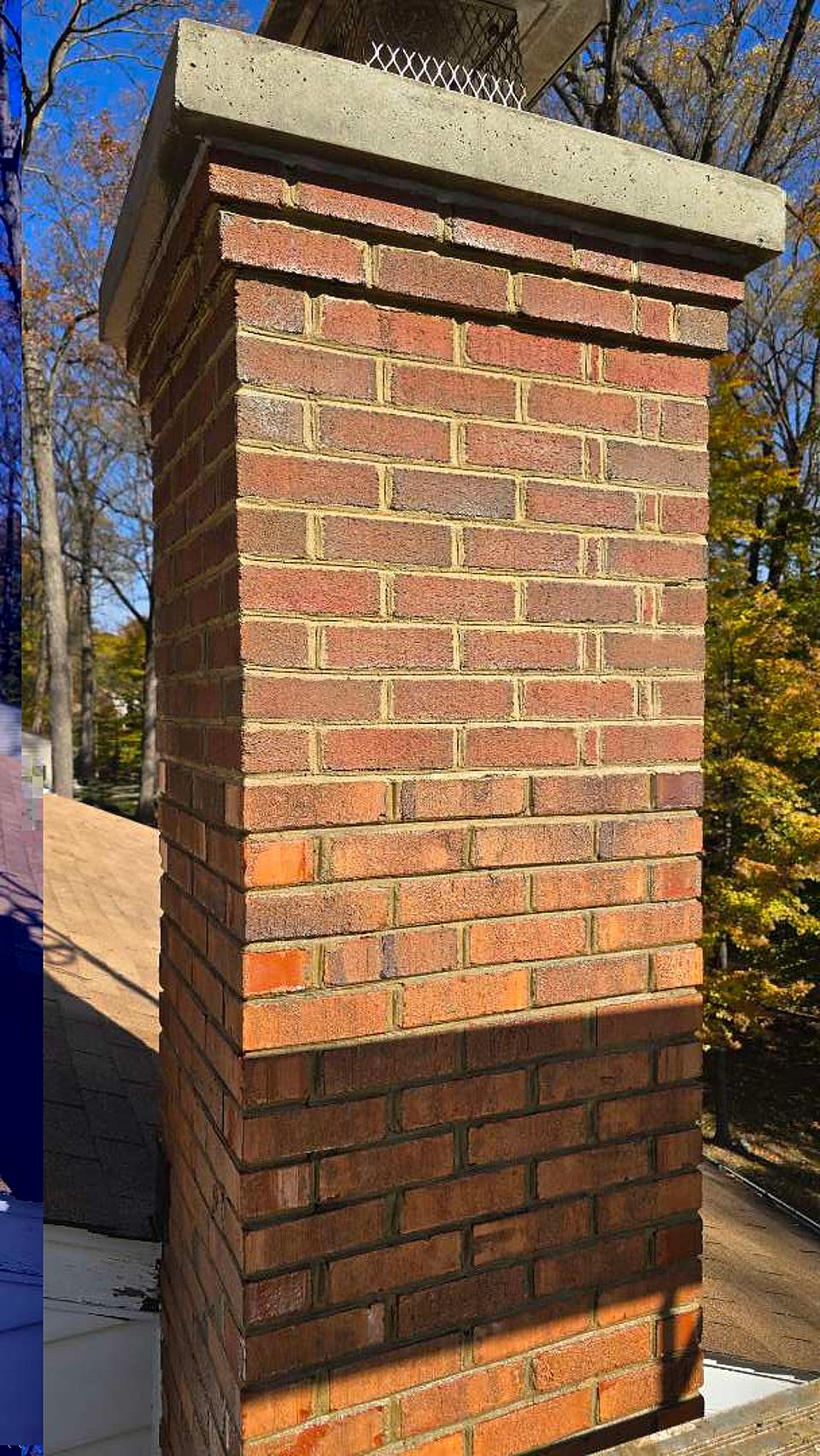
Masonry repair and tuckpointing are related but distinct processes, and the terms get used interchangeably in ways that obscure what each actually involves. Tuckpointing is a specific type of masonry repair focused on the mortar joints between bricks.
Masonry repair is a broader category that includes tuckpointing but also encompasses brick replacement, spalling correction, structural stabilization, and other work that goes beyond the mortar joints themselves. Understanding the difference matters when evaluating what a chimney actually needs and what a proposed scope of work actually covers.
Warning Signs
Mortar that has noticeably pulled back between brick courses indicates joint deterioration that tuckpointing can address while the surrounding brick is still sound.
Mortar that crumbles when probed or appears powdery has lost its structural integrity and is no longer bonding surrounding brick courses effectively.
Brick faces that have fractured or separated from the body of the brick indicate freeze-thaw damage that extends beyond mortar joint deterioration.
White staining on the chimney exterior indicates water actively moving through the masonry, often a sign that mortar joints or brick are absorbing more moisture than they should.
Water tracing back to the masonry rather than the crown or flashing points to joint or brick deterioration allowing water into the structure.
Continuous cracks running through mortar joints and brick faces suggest structural movement that goes beyond tuckpointing.
How We Fix It
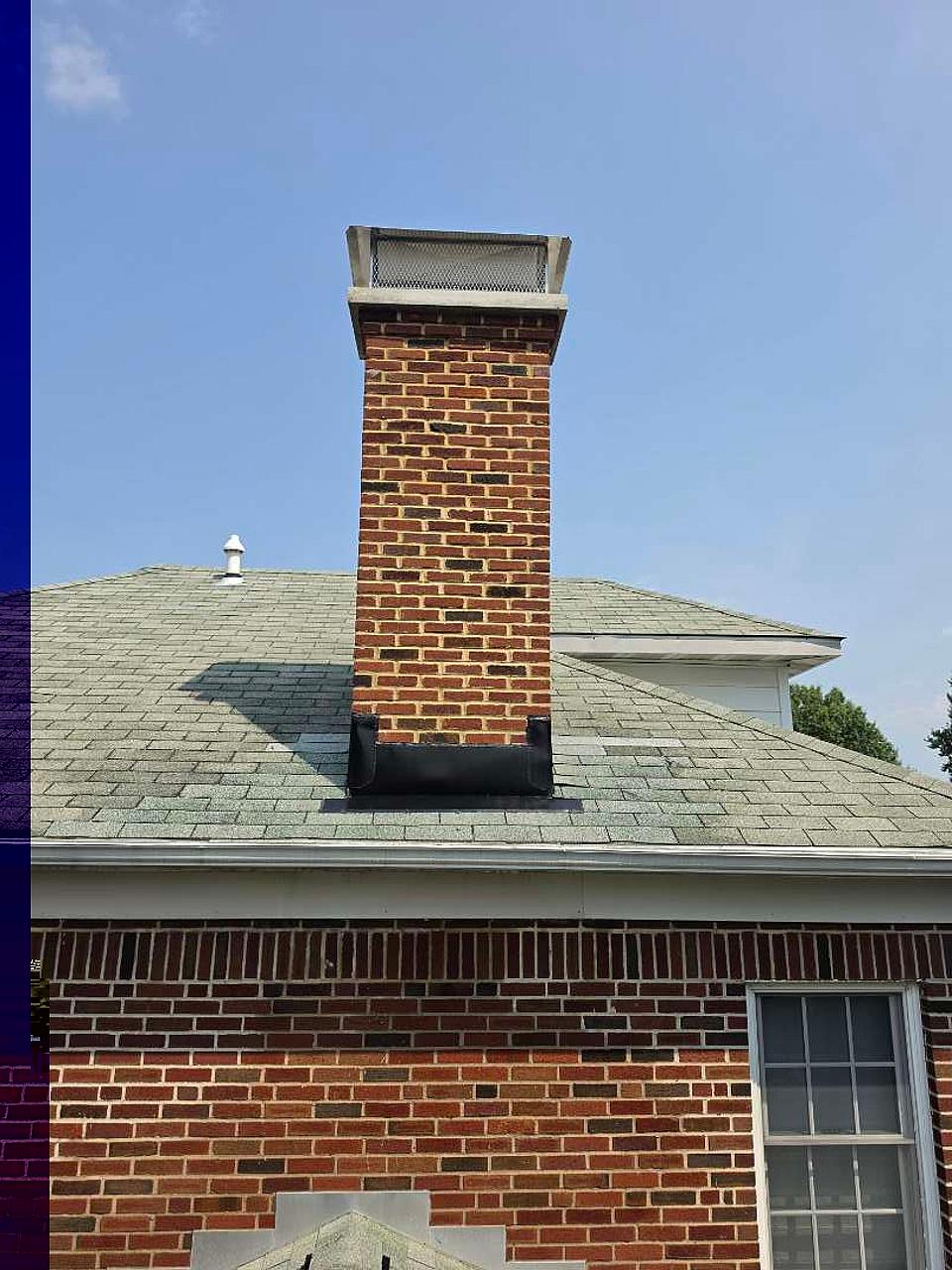
Our CSIA-certified technicians treat your property with care, shielding your home and grounds throughout the project. We rebuild damaged brickwork, patch cracked stone, and seal vulnerable joints to reinforce your chimney’s exterior, stop moisture penetration, and extend the life of your entire structure.
Drop cloths, HEPA vacuums, and careful containment protect your home throughout every visit.
CSIA, NFI, and F.I.R.E. certifications ensure expertise that exceeds industry standards.
Every sweep includes a Level 1 inspection, with Level 2 and Level 3 options available.
We show you clear evidence of our findings and recommend only necessary services.
How It Works
Call 443-602-4306 or request an apointment online, and we'll find a time that works for you.
A certified technician protects your home, sweeps the flue, and checks your chimney's condition.
We walk you through what we found with honest, straightforward recommendations.
Customer Reviews
See More ReviewsThe over 60 year old brick chimney on my parent's house had gotten into a state of disrepair, and I began looking for someone to take on the repair work. I spoke to 4 companies, and I'm glad that Trinity Chimney Service was one of them. Their response and estimate was the easy choice.
Greg B.
Verified Customer
I had to have a complete chimney replaced from the roof up due to leakage and water damage. They were able to match the brick perfectly and able to upgrade the crown and cap. They were respectful not only to me but also my lawn and property, even raking and fluffing the grass up at the end of each day.
Dwight P.
Verified Customer
I delayed my review for several months to see if the work done would hold up, and I am pleased to share that it continues to look great! Thanks for a job well done and the results continue to look like the day the work was initially done.
Edie H.
Verified Customer
FAQs
Freeze-thaw cycling is the most consistent and damaging force acting on chimney masonry in Central Maryland, and it works incrementally in ways that aren't always visible until the deterioration has advanced considerably. Water infiltrates mortar joints and the porous surface of brick during wet weather. When temperatures drop below freezing, that water expands by roughly nine percent, forcing apart the material it's trapped in. When temperatures rise, the water contracts, leaving slightly more space for the next cycle to work with.
Over many seasons, this process produces:
Catching freeze-thaw damage early through annual inspection is the most reliable way to stay ahead of what it eventually demands in repair costs.
Chimney masonry deterioration rarely has a single cause. In most cases, several factors work together over time to produce the kind of structural decline that requires professional attention.
The most common contributors Trinity identifies during chimney assessments include:
Mortar joints do more than fill the space between bricks. They're the structural bond that holds the masonry together and the first line of defense against water infiltration into the chimney system. When mortar crumbles, both of those functions break down simultaneously, and the consequences extend well beyond the joints themselves.
Crumbling mortar allows water to infiltrate the chimney structure at the joint level, where freeze-thaw cycling then works on the surrounding brick. Over time, brick that was previously protected by intact mortar begins to absorb moisture, spall, and lose structural integrity. What starts as a mortar joint problem becomes a brick problem, and eventually a structural problem that tuckpointing alone can no longer address.
The practical concern is the progression. Tuckpointing deteriorated mortar joints while the surrounding brick is still sound is a manageable repair. Waiting until the brick has been compromised by the moisture that crumbling mortar let in expands the scope considerably.
Deteriorating mortar absolutely contributes to brick instability, and in advanced cases it's the direct cause of bricks loosening and separating from the chimney structure. Mortar is the bonding agent that holds each course of brick to the one above and below it. When that bond erodes through joint deterioration, individual bricks lose the structural connection that keeps them in place.
The progression typically follows a recognizable pattern:
This is why Trinity treats crumbling mortar as a structural concern rather than a cosmetic one, and why annual inspections are the most reliable way to catch joint deterioration before it reaches the point of brick instability.
The honest answer is that distinguishing between cosmetic and structural masonry damage requires a professional evaluation, not a visual assessment from the ground or the fireside. What appears to be surface-level deterioration frequently reflects more significant structural compromise underneath, and what looks alarming on the surface is occasionally limited to the finish.
That said, certain indicators suggest structural concern rather than cosmetic wear:
Trinity assesses masonry condition directly during inspection visits and distinguishes between what requires structural attention and what falls within cosmetic repair, with documented findings rather than a judgment call from a distance.
Tuckpointing frequency isn't determined by a fixed schedule. It's determined by the condition of the mortar joints, and that condition depends on several factors specific to the chimney and how it's been maintained.
A few variables that shape how quickly mortar joints deteriorate and how often tuckpointing becomes necessary:
Annual chimney inspections are the most reliable way to monitor mortar joint condition and identify when tuckpointing is warranted before the deterioration reaches the brick itself. Trinity evaluates joint depth and integrity during every inspection and recommends tuckpointing based on what the masonry actually shows, not a predetermined timeline.
Central Maryland
We travel throughout Howard, Baltimore, Carroll, and Anne Arundel counties, bringing certified chimney and fireplace expertise to neighbors across Central Maryland.
Reach Out Today
Deteriorating mortar joints don't stabilize on their own, and the longer they go unaddressed, the more of the surrounding brick they affect. Trinity Chimney Service handles masonry repair and tuckpointing throughout Central Maryland with certified technicians and honest assessment. Contact us to schedule an evaluation and find out what your chimney's mortar joints actually need before the next season compounds the damage.
443-602-4306
Keeping a Central Maryland chimney structurally sound takes more than surface level work. Our chimney restoration includes historic restoration for homes that call for a specialized approach.