Water Protection
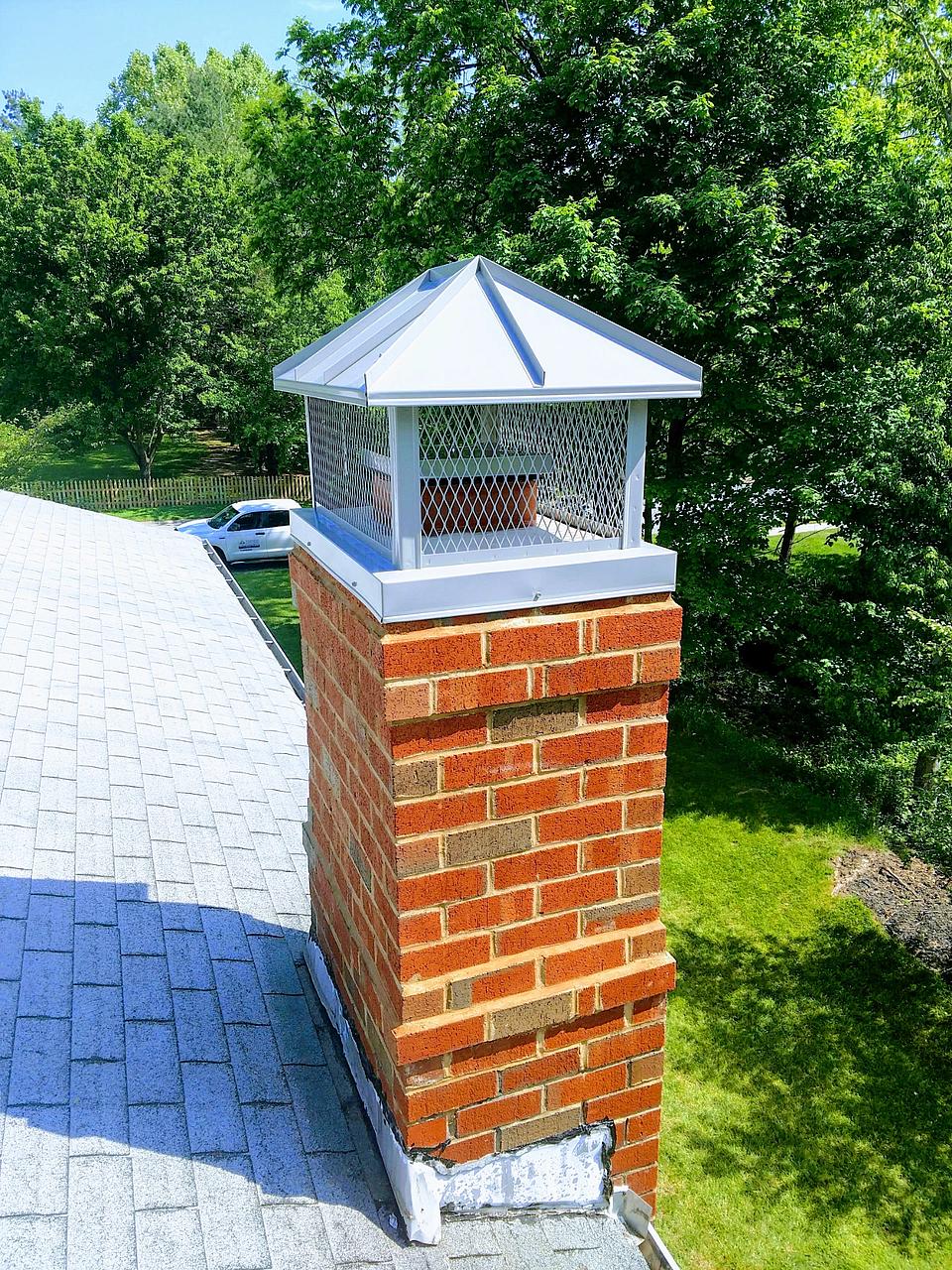
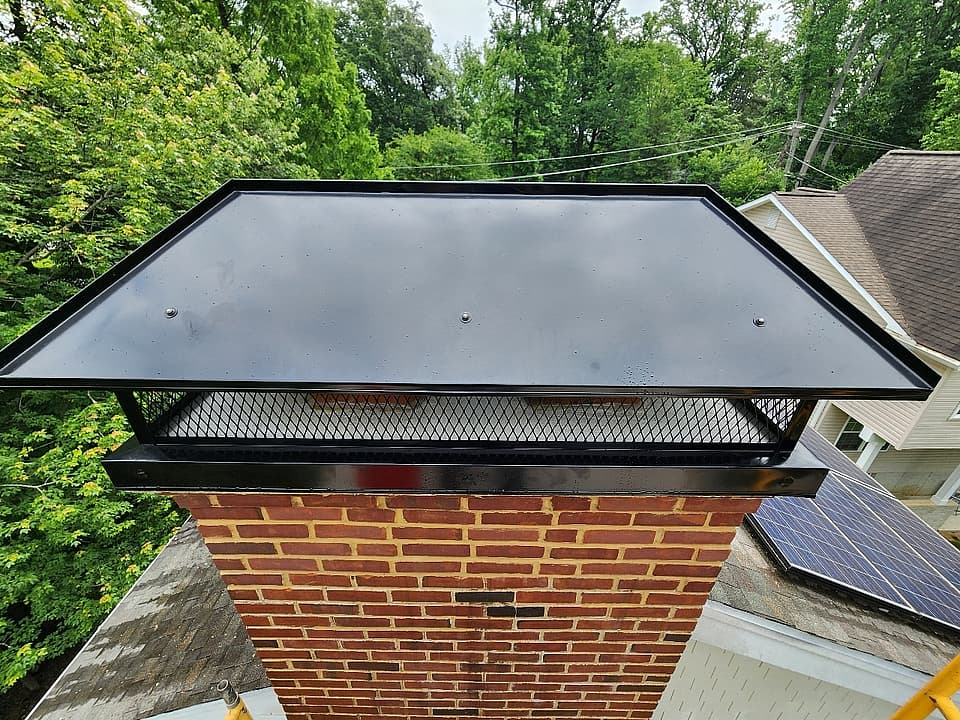
Shed rain with a hooded cap before moisture soaks into the masonry and firebox.
Mon–Fri 8:30 AM – 4 PM
Home > Services > Chimney Sweeping
Keep water, wildlife, and wasted heat out of your Severn, Towson, Columbia, or Halethorpe flue with a properly fitted cap or lock-top damper.
A chimney cap and top damper are two of the most cost-effective components a homeowner can add to a chimney system. Both protect the flue opening from water, debris, and animals, but they work differently and aren't always interchangeable. Trinity Chimney Service installs both throughout Central Maryland and helps homeowners determine which option actually fits their system.
Uncapped Risks
An uncapped chimney is an open flue, and an open flue is an entry point for everything the chimney system is designed to keep out. Water, animals, debris, and outside air all gain direct access to the interior of the chimney when there's nothing covering the flue opening, and the consequences compound over time in ways that affect the entire system. A chimney cap is one of the least expensive components in the system and one of the most consequential to leave out.
The Benefits
Shed rain with a hooded cap before moisture soaks into the masonry and firebox.
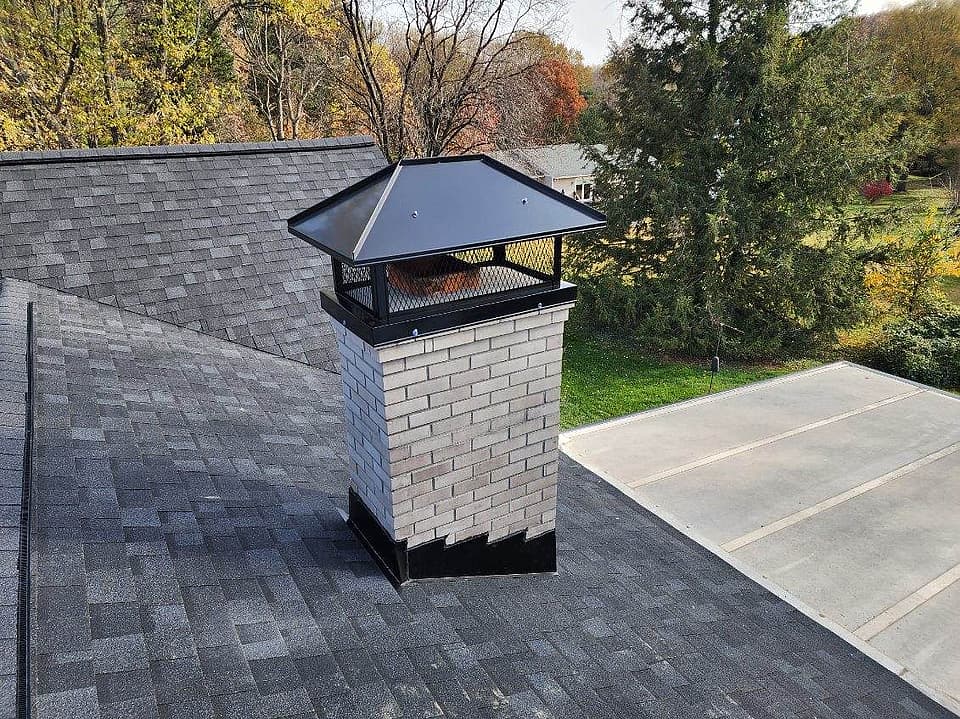
Block birds and raccoons using screened mesh without restricting system draft.
Prevent leaves and nesting materials from gathering in the flue to lower fire hazards.
Seal conditioned air at the crown with a lock-top damper to stop heat loss when not in use.
Minimize internal moisture exposure to prevent premature liner, crown, and masonry decay.
Maintain proper mesh screening to contain stray embers on wood-burning systems.
How We Fix It
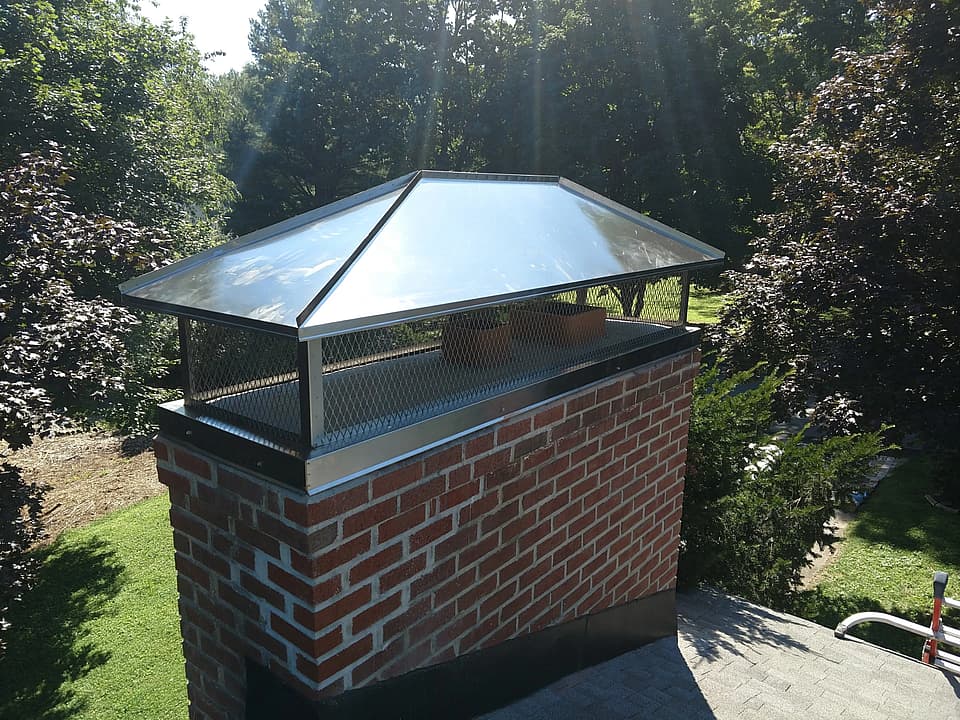
Trinity brings CSIA-certified precision to custom chimney cap and damper installations. Our team evaluates your top-of-chimney dimensions, fits robust single- or multi-flue caps to protect your masonry, and integrates lock-top dampers to stop conditioned air loss.
Measures flue and crown dimensions so the cap sits level and sheds water correctly.
Deploys CSIA, NFI, and F.I.R.E. credentialed technicians supported by full licensing (MHIC #114994) and insurance.
Installs single-flue, top-mount, or outside-mounted caps designed to fit your stack configuration.
Identifies underlying crown or liner needs clearly and recommends only essential service.
How It Works
Call 443-602-4306 or request an appointment online, and we'll find a time that works for you.
A certified technician confirms flue size, mounting style, and damper needs, then installs hardware that actually fits.
We walk you through what we installed and any related crown or leak work offering honest recommendations without pressure.
Customer Reviews
See More ReviewsLast year, I had them rebuild the top of my chimney because of the failing chimney cap which was cracking badly and pieces literally falling off to the ground. They did a Class A+ thorough quality service.
John R.
Verified Customer
I had a great experience working with Trinity Chimney for the installation of an electric fireplace. Trinity Chimney went above and beyond… replacing the chimney cap, insulating the walls of the prefab chimney, and properly flashing the bottom of the chimney with metal.
David R.
Verified Customer
I had to have a complete chimney replaced from the roof up due to leakage and water damage. They were able to match the brick perfectly and able to upgrade the crown and cap. They were respectful not only to me but also my lawn and property, even raking and fluffing the grass up at the end of each day.
Dwight P.
Verified Customer
FAQs
A throat damper and a chimney cap serve different functions, and having one doesn't eliminate the need for the other. A throat damper sits at the base of the flue and controls airflow into the firebox when the fireplace isn't in use. It doesn't cover the flue opening at the top of the chimney, which means water, animals, and debris still enter the flue freely above it.
Even a fully closed throat damper doesn't prevent:
A chimney cap addresses the flue opening at the top of the stack. A damper addresses airflow at the throat. The two work together, and neither makes the other unnecessary.
The three cap configurations serve different chimney types and address different installation requirements. Understanding which one applies to a specific chimney starts with the flue configuration and the chimney's construction.
Trinity evaluates the chimney configuration before recommending a cap type, rather than defaulting to whatever is easiest to install.
A chimney cap can contribute to draft performance in certain situations, but it isn't a universal solution for every draft problem. The relationship between a cap and draft depends on what's causing the issue in the first place.
Downdraft caused by wind pushing air down the flue is one area where a cap makes a meaningful difference. Certain cap designs, including those with wind-directional or spinning configurations, are specifically engineered to deflect wind at the flue opening and reduce the downdraft that causes smoke to back up into the living space.
Draft problems caused by other factors, including an undersized flue, a cold liner, inadequate combustion air, or obstructions further down the system, aren't resolved by a cap change. Trinity diagnoses the actual source of a draft issue before recommending a cap as part of the solution, because a cap installed for the wrong reason addresses the symptom rather than the problem.
Custom chimney caps are available for chimneys that don't accommodate standard off-the-shelf sizing. Older masonry chimneys, chimneys with multiple flues, and chimneys with non-standard dimensions or profiles often require a cap fabricated to fit the specific opening rather than a unit pulled from a standard product line.
Custom caps are typically fabricated from stainless steel or copper and can be built to fit:
Trinity assesses the chimney top during the site visit and determines whether a standard cap fits the application or whether a custom fabrication is the appropriate path before any product is ordered.
A top-mount damper is a legitimate alternative to a throat damper, and in many cases it's the more practical replacement when a throat damper has failed or no longer seals correctly. A top-mount damper installs at the top of the flue, seals with a rubber gasket when closed, and functions as both a damper and a chimney cap in a single unit.
A few considerations shape whether the swap makes sense for a specific chimney:
Trinity evaluates the existing damper condition and flue configuration before recommending a top-mount replacement, since the installation requirements vary depending on the chimney.
Chimney cap and top damper installation requires working at the roofline, and the risks involved in that work are the primary reason professional installation is the more practical choice for most homeowners. Beyond the physical access challenge, a few installation-specific issues make DIY approaches less reliable than they might appear.
Standard single-flue cap installation looks straightforward but involves:
Top-mount damper installation adds complexity around cable routing, bracket placement, and confirming the seal seats correctly across the full perimeter of the flue. A damper that isn't properly seated doesn't seal, which defeats the purpose of the installation. Trinity handles both cap and top damper installation as part of the same professional service applied to every chimney component.
Central Maryland
We travel throughout Howard, Baltimore, Carroll, and Anne Arundel counties, bringing certified chimney and fireplace expertise to neighbors across Central Maryland.
Reach Out Today
Both a chimney cap or top damper are simple investments that can protect a chimney system from water, animals, and debris. Trinity Chimney Service installs and replaces both throughout Central Maryland with certified technicians and honest recommendations. Reach out to schedule an appointment and find out which option fits your chimney.
443-602-4306
Keeping water out of a Central Maryland chimney starts at the top. Our chimney leak repair services take that protection further with chimney waterproofing.